Pool Green but Chlorine Is High? 4 Real Causes and Fixes
A green pool with a high chlorine reading usually means metals, too much stabilizer, a misleading test or pollen. Here's how to tell which one you have and what to do.
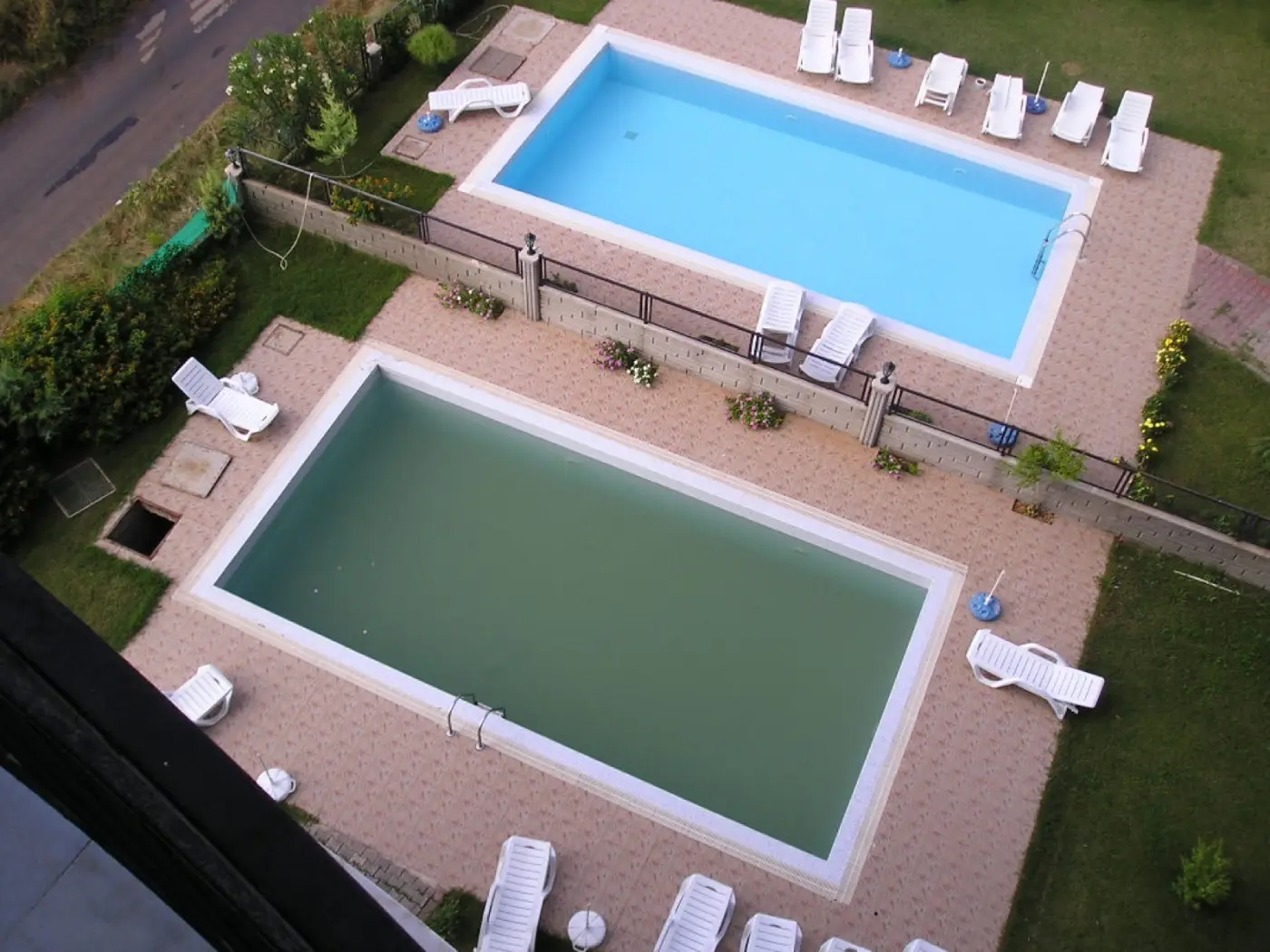
“The chlorine is high, so why is the pool green?” It’s one of the most searched pool questions, and the answer is almost always one of these four causes.
1. Metals, usually copper
Signs: the water is green or teal but clear, not cloudy. There’s no slime on the walls. Blue-green stains may appear on plaster. The color often gets worse right after you shock.
Where it comes from: copper-based algaecides, ionizers, corroding heater parts (often caused by low pH), and some well water. Fill water with iron can turn green-brown.
Fix:
- Stop adding copper algaecide.
- Lower pH to about 7.2, where metals stay in solution.
- Add a metal sequestrant, following the label.
- Find the source: check that the heater isn’t corroding and that pH doesn’t run low.
2. Too much stabilizer (CYA)
Signs: cloudy green water, slime, and test results like “5 ppm chlorine” with stabilizer at 100 ppm or more.
Stabilizer protects chlorine from the sun but slows it down. The rule of thumb is to keep free chlorine at about 7.5% of your CYA or more. With 100 ppm of CYA, that’s 7.5 ppm. So 5 ppm looks high but is too weak, and algae grows.
Fix: the only way to lower stabilizer is replacing water. Going from 100 to 50 ppm means replacing about half. Then shock to the level for your new CYA with the pool shock calculator. Our chlorine calculator shows the minimum chlorine for your stabilizer level.
3. The test is misleading you
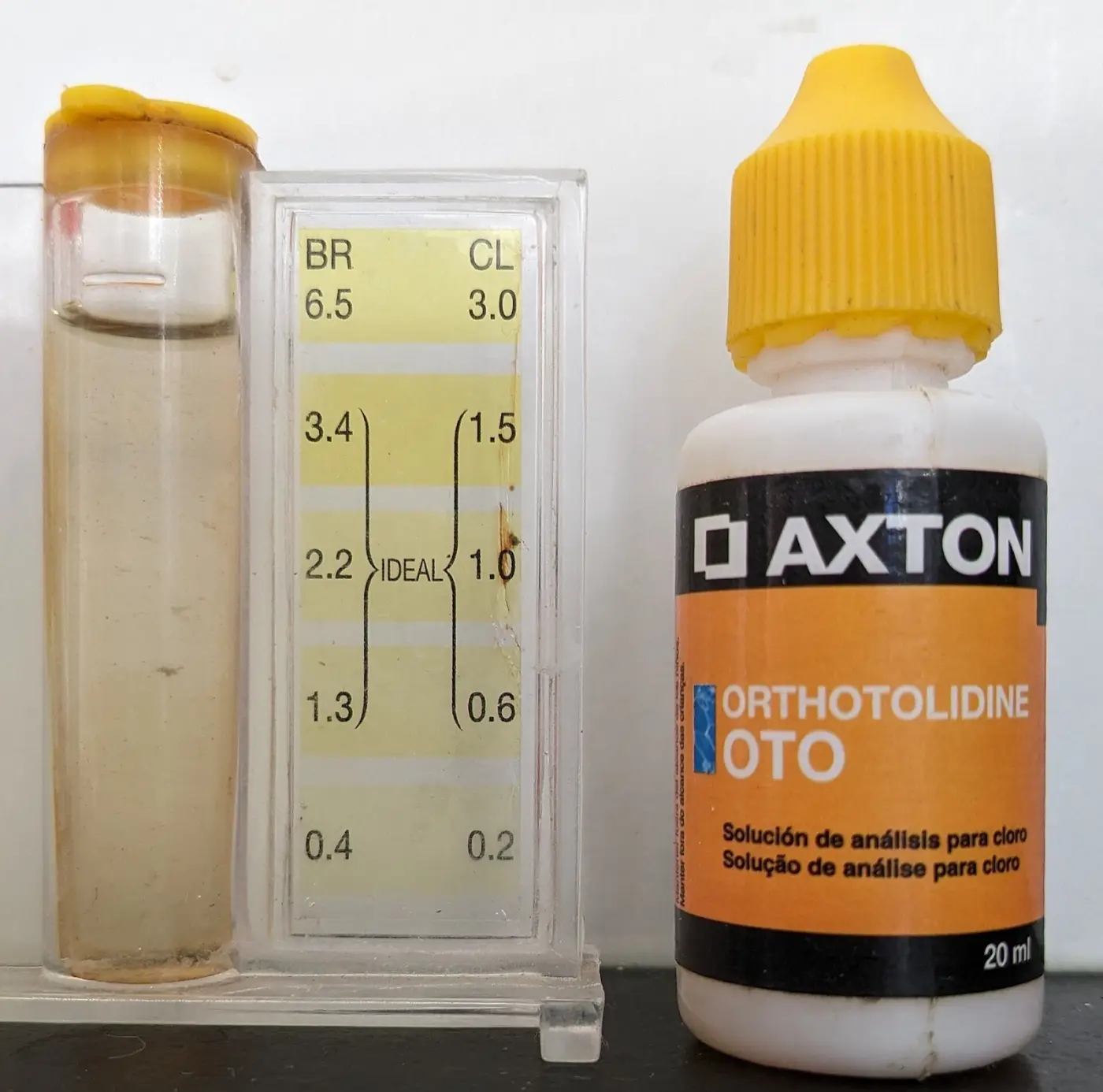
- Test strips can confuse free and total chlorine. Total chlorine includes used-up chloramines. A high total with a low free reading means the chlorine has been spent.
- Very high chlorine can bleach a DPD test. It may read pink, then fade to clear, which looks low. The opposite mistake happens too.
- Old reagents give wrong readings. Check the dates.
Fix: use a drop-test kit (FAS-DPD) for free chlorine and test stabilizer. If free chlorine is truly below 7.5% of your CYA, it’s simply too low. Shock.
4. Pollen, not algae
Signs: a yellow-green film or dust on the surface that sweeps away easily and appears in spring, often after windy days. It doesn’t cling to walls like algae.
Fix: skim, run the filter, clean it, and keep normal chlorine. Pollen doesn’t need a shock, though it does use up some chlorine.
Quick way to tell them apart
| What you see | Most likely cause |
|---|---|
| Clear green or teal water, stains | Metals |
| Cloudy green, slimy walls, CYA above 80 | Stabilizer too high |
| Strip says high, drop test says low | Test problem: chlorine is actually low |
| Yellow dust on the surface in spring | Pollen |
If none of these fits, treat it as algae: follow the green pool fix.
Run the numbers for your pool
Using your saved pool: . My pool
57.6 fl oz
of liquid chlorine 10% raises free chlorine from 1 to 4 ppm in 15,000 gallons.
- Per 1 ppm
- 19.2 fl oz
- Increase
- 3 ppm
- Minimum for your CYA
- 3 ppm
What to add
- 57.6 fl ozLiquid chlorine 10%
What would change your result
- Tablets or liquid? See what each one adds to your water over a season.Read
Add chlorine in the evening with the pump running, and never mix it with acid or another chlorine product.
Quick answers
Can a pool be green with high chlorine?
Yes. The most common reasons are copper or other metals in the water, a stabilizer level so high that the chlorine is too weak, or a test that reads total instead of free chlorine.
How do I know if my pool is green from algae or metals?
Algae makes cloudy, slimy water and gets better when you shock. Metals give clear green or teal water, often with stains, and shocking can make it worse.
What does high stabilizer do to chlorine?
Stabilizer (cyanuric acid) protects chlorine from sunlight but also slows it down. With very high CYA, a chlorine level that looks high on paper is too weak to stop algae.
Pool costs in your state
What a pool pump and a hot tub cost to run at your state's electricity price.
Keep reading
 How to Raise pH in a Pool: Soda Ash, Aeration or BoraxLow pool pH stings eyes and eats equipment. Here's how to raise it with aeration, soda ash or borax, how much to start with, and why it keeps dropping.
 Pool Salt Cell Guide: How It Works, Cleaning and Low Salt ReadingsHow a pool salt cell makes chlorine, how to clean it, how long it lasts, and why it reads 'low salt' when the water isn't. A practical guide for salt pool owners.
 Shocked Your Pool? What to Do Next (and Why It's Cloudy)What happens after you shock a pool, how long to wait before swimming, why the water often turns cloudy, and how to tell when the shock has done its job.