Pool chemical calculator
Type in your test results and the levels you want. Get every dose in one list, in the order to add them.
In short: Each dose is gallons × ppm change × 8.34 ÷ 1,000,000, adjusted for the product’s strength. To raise free chlorine by 3 ppm in 10,000 gallons you need 38 fl oz of 10% liquid chlorine.
Formulas reviewed November 1, 2026 · How we calculate
Using your saved pool: . My pool
4 chemicals to add
Add them one at a time, a few hours apart, with the pump running. Never mix chemicals together.
- Pool size
- 15,000 gal
- Chlorine target
- 4 ppm
- Stabilizer target
- 40 ppm
What to add
- 6.3 lbBaking soda (sodium bicarbonate) to raise alkalinity by 30 ppm
- 18 lbCalcium chloride (dihydrate, 77–80%) to raise hardness by 100 ppm
- 2.5 lbStabilizer (cyanuric acid) to raise CYA by 20 ppm. Dissolves slowly: use a sock in the skimmer
- 57.6 fl ozLiquid chlorine 10% to raise free chlorine by 3 ppm
What would change your result
Read every product label and follow its safety directions.
Pool chemical chart: dose per 10 ppm
How much of each balancing chemical raises its level by 10 ppm. Double it for 20 ppm, and so on.
| Pool size | Baking soda (alkalinity) | Calcium chloride (hardness) | Stabilizer (CYA) |
|---|---|---|---|
| 10,000 gal | 1.4 lb | 1.2 lb | 13.3 oz |
| 15,000 gal | 2.1 lb | 1.8 lb | 1.3 lb |
| 20,000 gal | 2.8 lb | 2.4 lb | 1.7 lb |
| 25,000 gal | 3.5 lb | 3.1 lb | 2.1 lb |
| 30,000 gal | 4.2 lb | 3.7 lb | 2.5 lb |
Getting it right
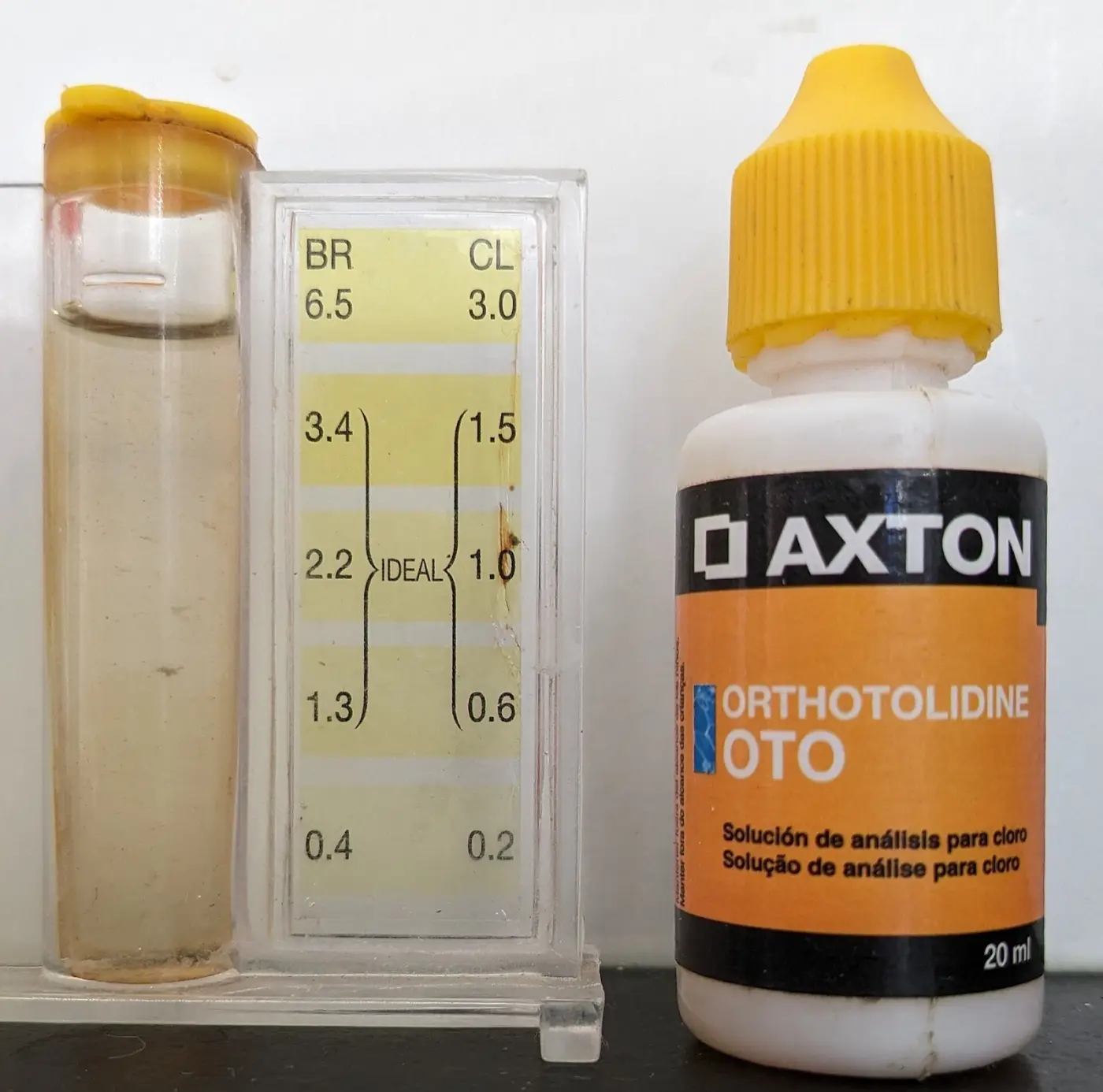

Test first, then dose. A good drop test kit measures free chlorine, pH, alkalinity, calcium hardness and stabilizer. Test strips are fine for daily chlorine checks but rough for balancing.
Balance in this order: alkalinity, then pH, then calcium, then stabilizer, and chlorine last. Alkalinity steadies pH, and chlorine works best once pH sits around 7.2–7.6.
Know what your chlorine adds. Tablets and dichlor add stabilizer every time; cal-hypo adds calcium. Over a season that changes the numbers you'll enter here, so retest stabilizer monthly.
One chemical at a time. Wait a few hours between additions, with the pump running, and never mix products in a bucket.
Key facts
- Baking soda raises alkalinity: about 1.4 lb per 10,000 gallons for each 10 ppm.
- Stabilizer (CYA) protects chlorine from sunlight, but the more you have, the more chlorine you need to keep the water sanitary.
- Dichlor and trichlor add stabilizer every time you use them; cal-hypo adds calcium.
How it's calculated
Every dose starts from the same formula: pool gallons × ppm change × 8.34 ÷ 1,000,000 gives the pounds of pure chemical. That is then adjusted for what the product really contains.
- Liquid chlorine: 1 gallon of 10% raises 10,000 gallons by 10 ppm.
- Dry chlorine: pure pounds ÷ strength (0.65 for 65% cal-hypo).
- Baking soda: × 1.68, because alkalinity is measured as calcium carbonate.
- Calcium chloride dihydrate: × 1.47.
- Stabilizer: × 1.
The list is in a sensible order: alkalinity and calcium first, stabilizer next, chlorine last.
Questions people ask
How much baking soda do I need to raise alkalinity?
About 1.4 lb per 10,000 gallons for each 10 ppm. To raise a 20,000-gallon pool from 60 to 90 ppm, that is about 8.4 lb.
What order should I add pool chemicals in?
Alkalinity first, then pH, then calcium, then stabilizer, and chlorine last. Wait a few hours between each and keep the pump running.
How much liquid chlorine do I add to my pool?
For 10% liquid chlorine, about 12.8 fl oz per 10,000 gallons raises free chlorine by 1 ppm. The calculator scales that to your pool and target.
What should my free chlorine be?
It depends on your stabilizer. A common rule is to keep free chlorine at about 7.5% of your CYA or more, for example 3 ppm or higher with 40 ppm of CYA.
Why doesn’t the calculator handle pH?
The acid dose to lower pH depends on alkalinity and other factors that a simple formula gets wrong. Add acid in small steps and retest.
Pool care guides
 Why Is My Pool Cloudy? 6 Causes and How to Clear It FastCloudy pool water comes from low chlorine, a struggling filter, or water chemistry out of balance. Find your cause in a few minutes and clear it the right way.
- How to Lower pH in a Pool (and Raise It When It's Too Low)The ideal pool pH is 7.2 to 7.8. Here's how to bring it down with muriatic or dry acid, how to raise it with soda ash or aeration, and why it keeps drifting.
- How to Raise pH in a Pool: Soda Ash, Aeration or BoraxLow pool pH stings eyes and eats equipment. Here's how to raise it with aeration, soda ash or borax, how much to start with, and why it keeps dropping.
Other pool calculators
- Pool volume calculatorHow many gallons your pool holds
- Pool salt calculatorHow many bags of salt to add
- Pool shock calculatorHow much shock to add
- Pool pump calculatorFlow rate, run time and cost
- Pool heater calculatorBTU size and heat-up cost
- Pool fill cost calculatorWater cost and time to fill
- Pool chlorine calculatorHow much chlorine to add
- Pool heat pump size calculatorWhat size heat pump you need
- Hot tub chemical calculatorSpa chlorine, alkalinity and calcium
- Hot tub electricity cost calculatorWhat your spa costs to run