Free pool calculators and guides
Clear water starts with the right numbers.
Exact doses for your pool, not for “10,000 gallons”. Then plain answers when the water turns green, cloudy or stubborn.
Photo: Kgbo, CC BY-SA 4.0

11 calculators, one pool
Measure once. Each result links to the next calculator with your gallons already filled in, and every one shows its formula.
 Pool volume calculatorHow many gallons your pool holds
 Pool salt calculatorHow many bags of salt to add
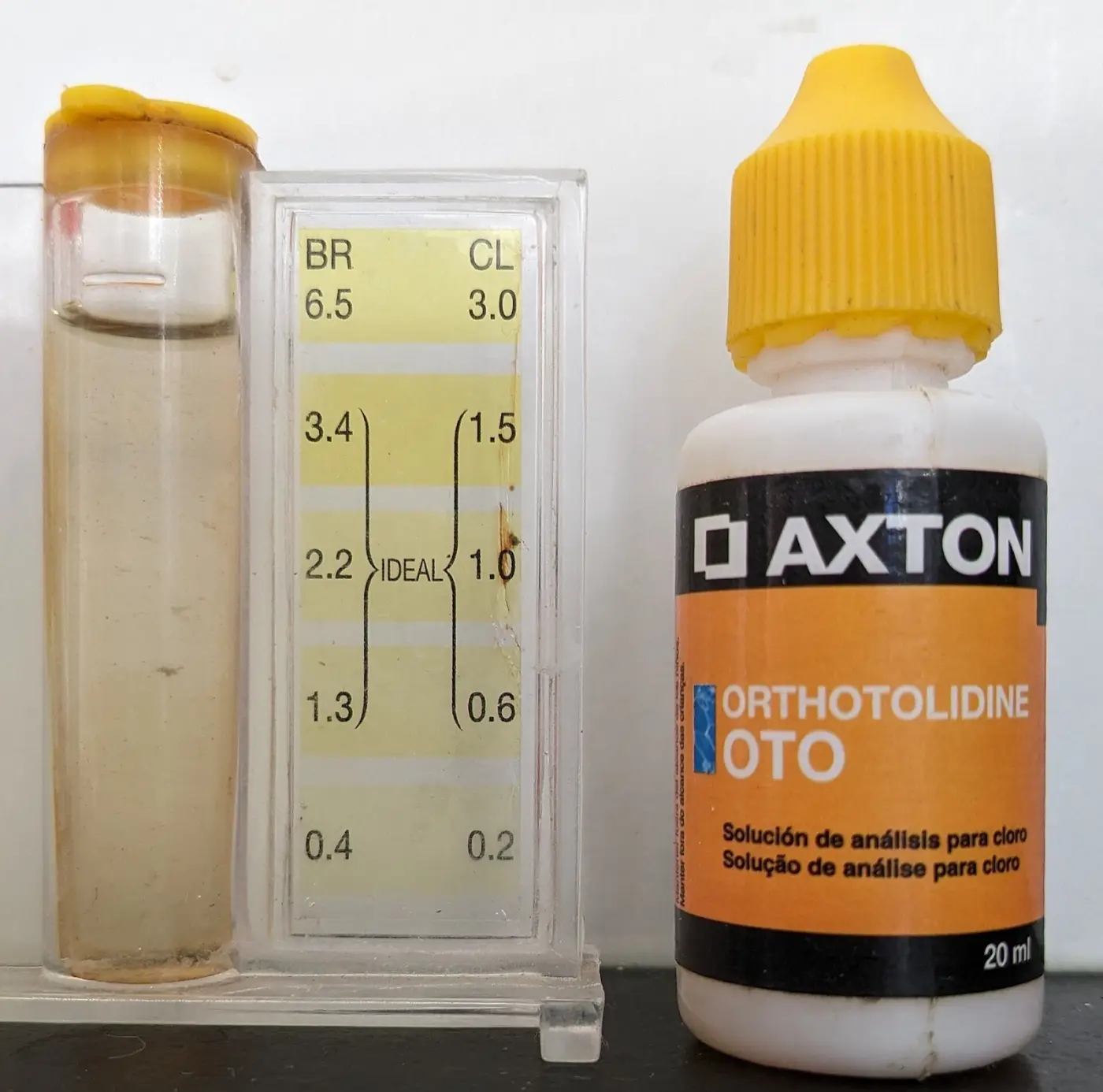 Pool chemical calculatorChlorine, alkalinity, calcium, stabilizer
 Pool shock calculatorHow much shock to add
 Pool pump calculatorFlow rate, run time and cost
 Pool heater calculatorBTU size and heat-up cost
 Pool fill cost calculatorWater cost and time to fill
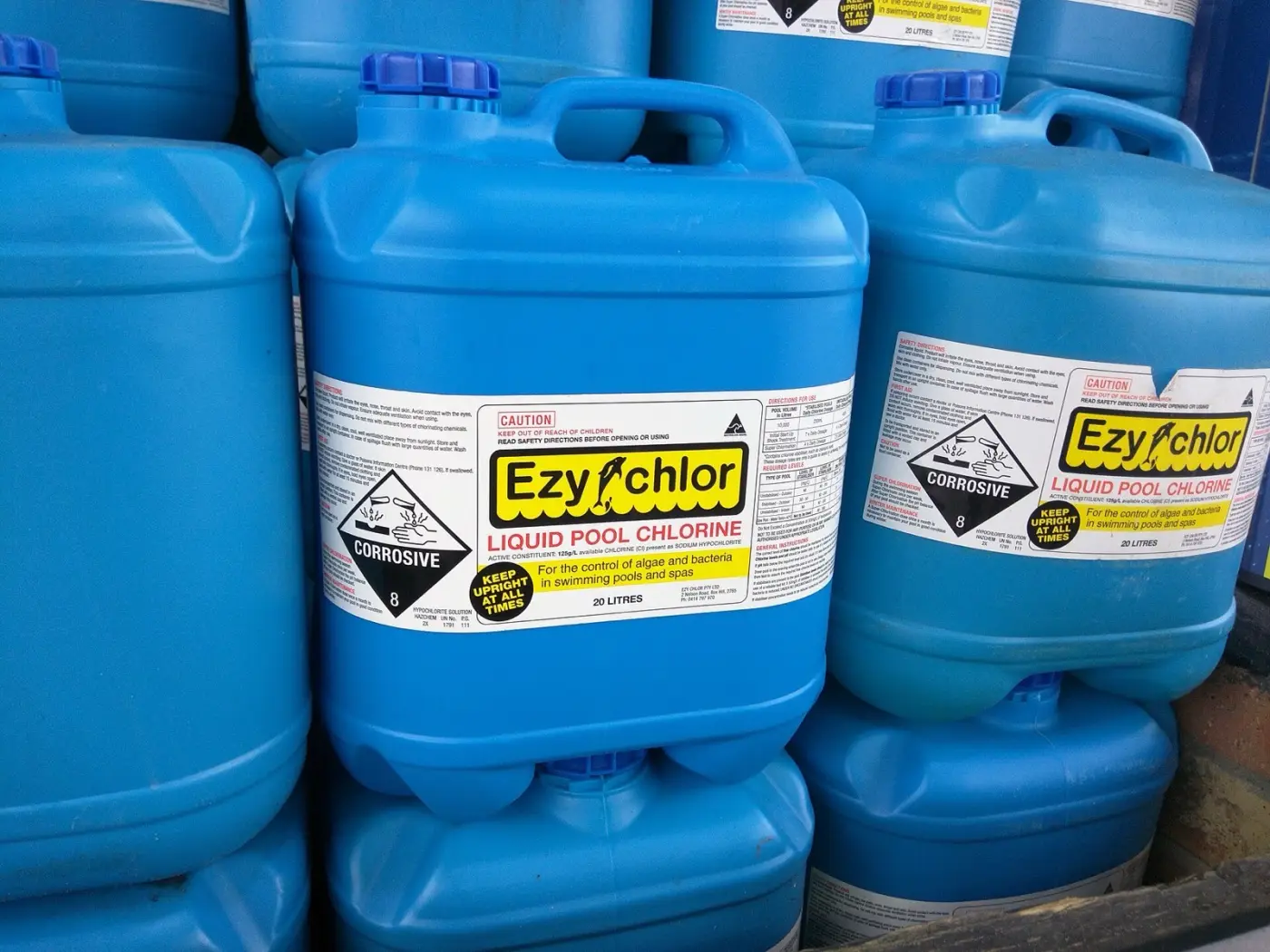 Pool chlorine calculatorHow much chlorine to add
- Pool heat pump size calculatorWhat size heat pump you need
 Hot tub chemical calculatorSpa chlorine, alkalinity and calcium
- Hot tub electricity cost calculatorWhat your spa costs to run
Something wrong with the water?
The three problems pool owners search for most, and how to fix each one for good.
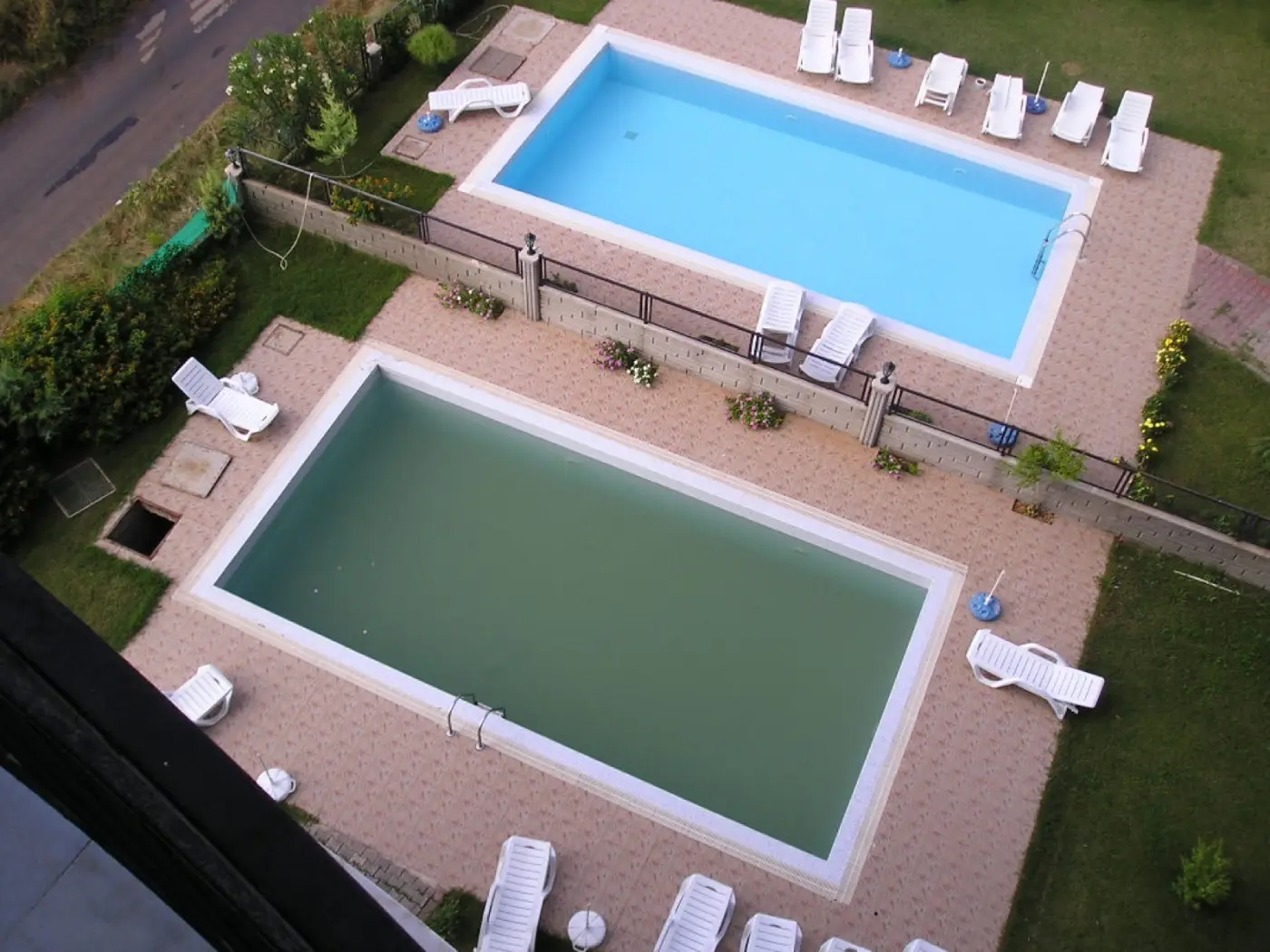 Green waterWhy Is My Pool Green? Causes and a 4-Step FixAlgae won because chlorine fell too low for your stabilizer.
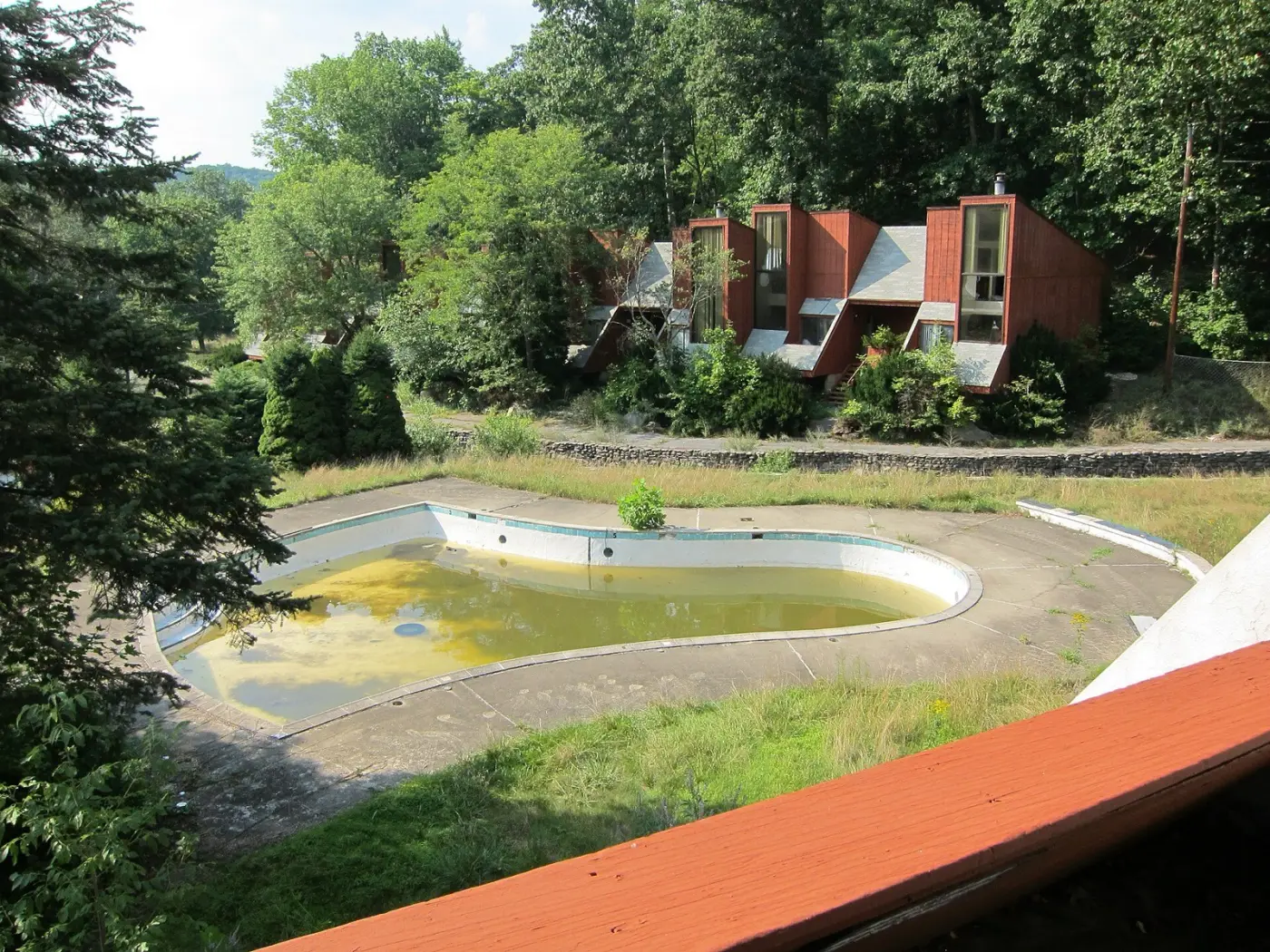 Cloudy waterWhy Is My Pool Cloudy? 6 Causes and How to Clear It FastLow chlorine, a tired filter or pH that drifted high.
- pH keeps risingHow to Lower pH in a Pool (and Raise It When It's Too Low)Common with salt pools, waterfalls and high alkalinity.
The numbers that keep a pool clear
Test these once a week (chlorine and pH more often in summer). When one is off, the linked calculator tells you exactly how much to add.
These are the common targets used by pool professionals. Your pool surface, salt cell or equipment manual may ask for something slightly different; follow it.
| Test | Target | Note |
|---|---|---|
| Free chlorine | ≥ 7.5% of your CYA | e.g. 3 ppm with 40 ppm stabilizer |
| pH | 7.2 – 7.8 | Most owners aim for 7.4 – 7.6 |
| Total alkalinity | 60 – 120 ppm | Lower end in salt pools |
| Calcium hardness | 200 – 400 ppm | Plaster pools at the higher end |
| Stabilizer (CYA) | 30 – 50 ppm | 60 – 80 ppm in salt pools |
| Salt | 2,700 – 3,400 ppm | Only for salt chlorine generators |
A 10-minute weekly routine
Most green and cloudy pools start with a skipped week. This is the short list that prevents it.
- Test chlorine and pH two or three times a week, and the full panel once a week.
- Top up chlorine to your target. Liquid chlorine adds nothing that builds up; tablets add stabilizer.
- Adjust pH with acid if it drifted above 7.8.
- Skim, brush and empty the baskets. Brushing walls stops algae before you can see it.
- Check filter pressure and clean the filter when it runs 8–10 psi above clean.
- Run the pump long enough for one full turnover. The pump calculator gives you the hours.
Pool costs in your state
Pump and hot tub running costs at your state's electricity price, and how many pools your neighbors have.
Latest pool care guides
All guides →- How to Raise pH in a Pool: Soda Ash, Aeration or BoraxLow pool pH stings eyes and eats equipment. Here's how to raise it with aeration, soda ash or borax, how much to start with, and why it keeps dropping.
- Pool Green but Chlorine Is High? 4 Real Causes and FixesA green pool with a high chlorine reading usually means metals, too much stabilizer, a misleading test or pollen. Here's how to tell which one you have and what to do.
- Pool Salt Cell Guide: How It Works, Cleaning and Low Salt ReadingsHow a pool salt cell makes chlorine, how to clean it, how long it lasts, and why it reads 'low salt' when the water isn't. A practical guide for salt pool owners.
Pool questions, answered
What should the chlorine level be in a pool?
It depends on your stabilizer. A common rule is to keep free chlorine at about 7.5% of your CYA level or more: 3 ppm with 40 ppm of stabilizer, 6 ppm with 80 ppm.
How often should I shock my pool?
Only when needed: algae, cloudy water, a big swim party or storm, or combined chlorine above 0.5 ppm. A pool kept at the right chlorine level every day rarely needs shocking.
How long should I run my pool pump each day?
Long enough to filter all the water once: pool gallons ÷ (pump GPM × 60). For most pools that is 6 to 10 hours, more in hot weather.
How many gallons is my pool?
Length × width × average depth in feet × 7.48 for a rectangle. For other shapes, use the pool volume calculator, which also carries the result into every other calculator.
Is a salt water pool better than a chlorine pool?
A salt pool is a chlorine pool that makes its own chlorine. It needs less daily dosing but costs more upfront and usually needs acid every week or two.