Pool volume calculator
Measure the water, not the deck. Enter the shape and depths and get the gallons every chemical dose depends on.
In short: Pool volume in US gallons is the water surface area in square feet × the average depth in feet × 7.48. A 32 × 16 ft rectangle that goes from 3.5 to 8 ft deep holds about 22,000 gallons.
Formulas reviewed November 1, 2026 · How we calculate
Using your saved pool: . My pool
22,023 gallons
Your rectangle pool holds about 22,000 gallons of water.
- Water surface
- 512 ft²
- Average depth
- 5.75 ft
- In liters
- 83,365 L
What to add
What would change your result
Measured to the waterline. Steps, benches and sloped walls change the real figure by a few percent.
Pool gallon chart: common pool sizes
Approximate gallons for common inground and above-ground pools, filled to the usual waterline.
| Pool | Depth | Gallons |
|---|---|---|
| 12 × 24 ft rectangle | 3.5 to 6 ft | 10,200 |
| 15 × 30 ft rectangle | 3.5 to 8 ft | 19,400 |
| 16 × 32 ft rectangle | 3.5 to 8 ft | 22,000 |
| 18 × 36 ft rectangle | 3.5 to 8 ft | 27,900 |
| 20 × 40 ft rectangle | 3.5 to 8 ft | 34,400 |
| 15 ft round | 4 ft | 5,300 |
| 18 ft round | 4 ft | 7,600 |
| 24 ft round | 4 ft | 13,500 |
| 27 ft round | 4 ft | 17,100 |
| 30 × 15 ft oval | 4 ft | 10,600 |
Getting it right
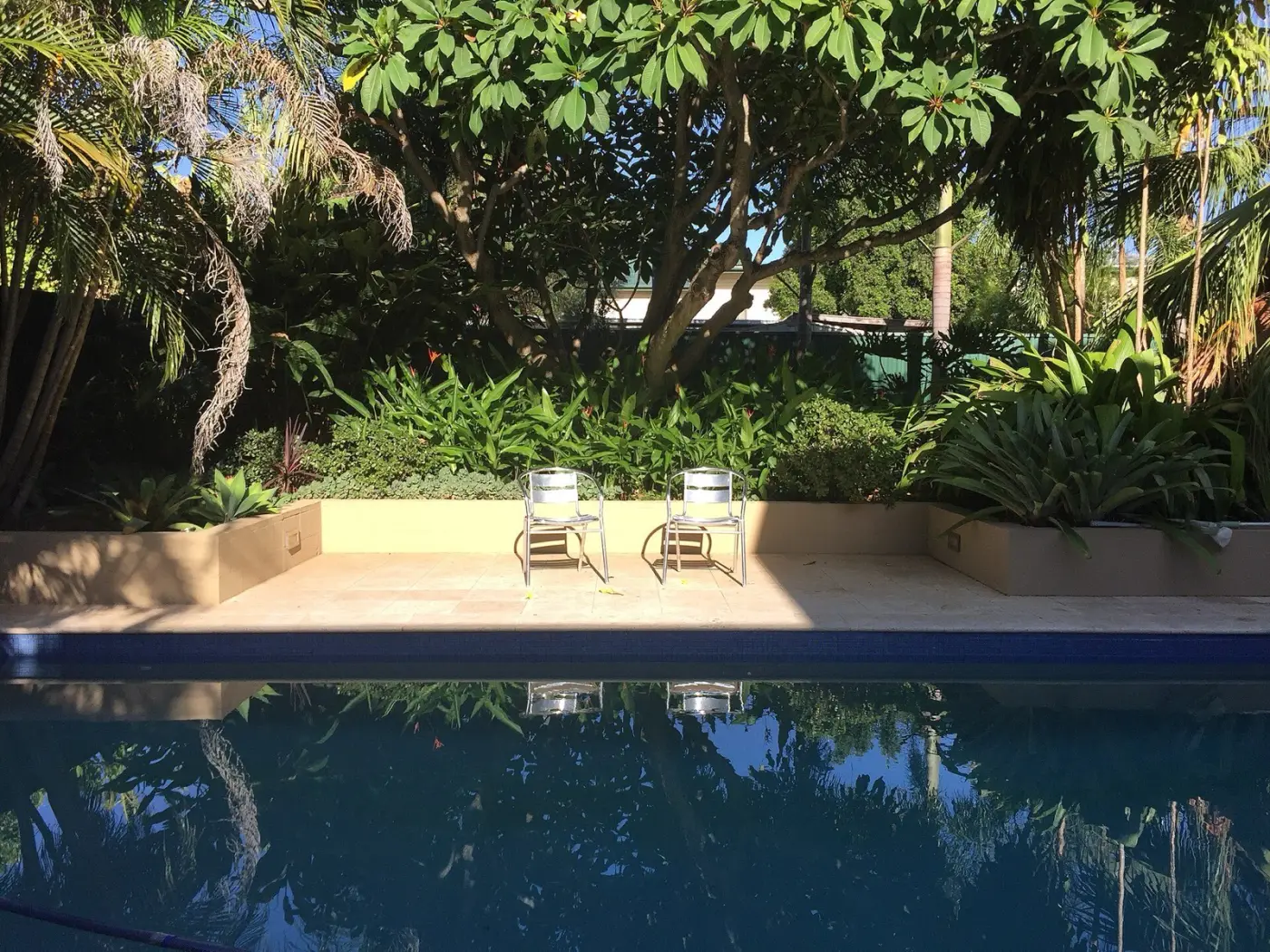

Measure the water, not the pool. Use a tape from the floor to the waterline at the shallow end and the deep end. Wall height overstates the volume, especially on above-ground pools that are filled a few inches below the top.
Use inside dimensions. Measure from wall to wall, not across the coping. On a 16 × 32 ft pool, measuring the coping instead of the water can add 10% to the volume.
Odd shapes: split the pool into simple pieces, say a rectangle plus a half circle, and add the gallons. For freeform pools, the kidney setting gets close.
Then use it everywhere. Every chemical label doses per gallon. Click a link under the result and the next calculator opens with your gallons already filled in.
Key facts
- One cubic foot of water is 7.48 US gallons.
- A typical 16 × 32 ft inground pool holds roughly 17,000 to 22,000 gallons, depending on the deep end.
- Every dose on a chemical label is per gallon of water, so a 20% error in volume means a 20% error in every dose.
How it's calculated
The calculator multiplies the water's surface area by its average depth, then converts cubic feet to gallons (× 7.48).
- Rectangle: length × width.
- Round: 3.14 × (diameter ÷ 2)².
- Oval: 3.14 ÷ 4 × length × width.
- Kidney: 0.45 × (width A + width B) × length, the rule pool builders use.
Average depth is (shallow end + deep end) ÷ 2. That is exact for a floor that slopes evenly and close enough for most hopper-bottom pools.
Questions people ask
How do I calculate how many gallons are in my pool?
Multiply length × width × average depth in feet, then multiply by 7.48. For round pools use 3.14 × radius² for the area. The calculator above does this for four shapes.
How do I find the average depth?
Add the shallow-end depth and the deep-end depth and divide by two. Measure the water, from the floor to the waterline, not the wall height.
How many gallons is a 24 ft round above-ground pool?
At a 52-inch wall filled to about 4 ft, a 24 ft round pool holds roughly 13,500 gallons.
How many gallons is a 16 × 32 pool?
About 22,000 gallons if it goes from 3.5 to 8 ft deep, and about 17,200 gallons at an even 4.5 ft. Enter your own depths above for the exact figure.
Why does my pool volume matter?
Salt, chlorine, shock and balancing chemicals are all dosed per gallon. Getting the volume right is the first step to dosing anything correctly.
Add this calculator to your site
Pool builders, service companies and bloggers can embed this calculator for free. Copy the code below into any page. It stays up to date automatically.
Pool care guides
 How to Raise pH in a Pool: Soda Ash, Aeration or BoraxLow pool pH stings eyes and eats equipment. Here's how to raise it with aeration, soda ash or borax, how much to start with, and why it keeps dropping.
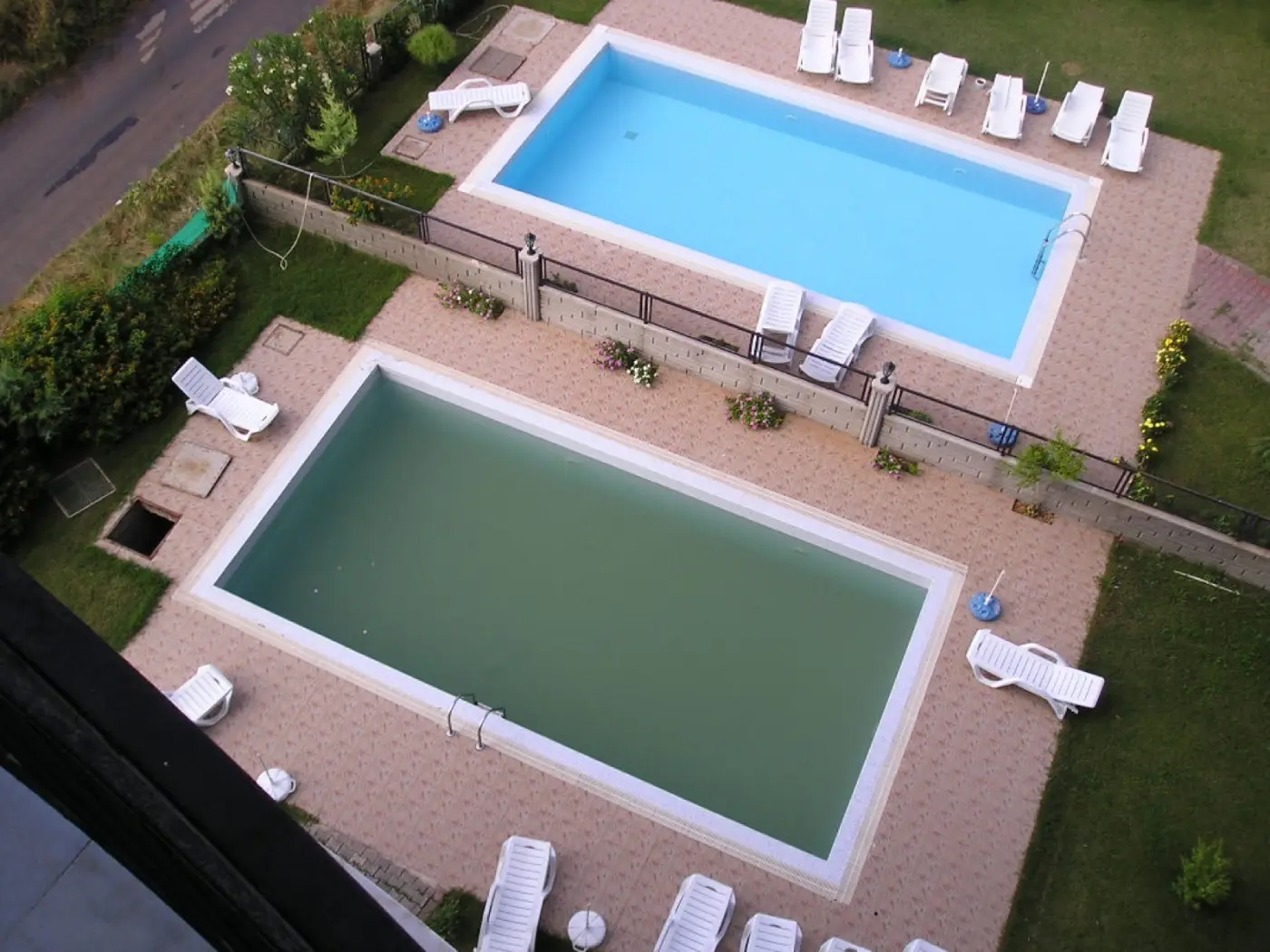 Pool Green but Chlorine Is High? 4 Real Causes and FixesA green pool with a high chlorine reading usually means metals, too much stabilizer, a misleading test or pollen. Here's how to tell which one you have and what to do.
 Pool Salt Cell Guide: How It Works, Cleaning and Low Salt ReadingsHow a pool salt cell makes chlorine, how to clean it, how long it lasts, and why it reads 'low salt' when the water isn't. A practical guide for salt pool owners.
Other pool calculators
- Pool salt calculatorHow many bags of salt to add
- Pool chemical calculatorChlorine, alkalinity, calcium, stabilizer
- Pool shock calculatorHow much shock to add
- Pool pump calculatorFlow rate, run time and cost
- Pool heater calculatorBTU size and heat-up cost
- Pool fill cost calculatorWater cost and time to fill
- Pool chlorine calculatorHow much chlorine to add
- Pool heat pump size calculatorWhat size heat pump you need
- Hot tub chemical calculatorSpa chlorine, alkalinity and calcium
- Hot tub electricity cost calculatorWhat your spa costs to run