Hot tub chemical calculator
Spa doses are tiny and easy to overshoot. Get them exactly, for your tub's gallons and test results.
In short: The math is the same as a pool, at spa volumes. Raising chlorine by 3 ppm in a 400-gallon tub takes about 0.3 oz of 56% dichlor; raising alkalinity by 30 ppm takes about 2.7 oz of baking soda.
Formulas reviewed November 1, 2026 · How we calculate
Using your saved pool: . My pool
4 chemicals to add
Add them one at a time, a few hours apart, with the pump running. Never mix chemicals together.
- Pool size
- 400 gal
- Chlorine target
- 4 ppm
- Stabilizer target
- 30 ppm
What to add
- 2.7 ozBaking soda (sodium bicarbonate) to raise alkalinity by 30 ppm
- 5.9 ozCalcium chloride (dihydrate, 77–80%) to raise hardness by 75 ppm
- 1.6 ozStabilizer (cyanuric acid) to raise CYA by 30 ppm. Dissolves slowly: use a sock in the skimmer
- 0.29 ozDichlor 56% (granular) to raise free chlorine by 3 ppm
What would change your result
- Alkalinity under 60 ppm lets pH swing with every rain and dose. Add the baking soda first, then retest pH.
- Using dichlor 56% (granular) for 3 ppm a day adds about 19 ppm of stabilizer a week. Liquid chlorine adds none.
Note: this chlorine also adds about 2.7 ppm of stabilizer. Read every product label and follow its safety directions.
Hot tub chemical chart
Doses for common spa sizes. Add half, wait 15 minutes with the jets on, test, then add the rest.
| Spa size | Dichlor 56%: +1 ppm chlorine | Baking soda: +10 ppm alkalinity | Calcium chloride: +10 ppm hardness |
|---|---|---|---|
| 300 gal | 0.07 oz | 0.67 oz | 0.59 oz |
| 400 gal | 0.1 oz | 0.9 oz | 0.78 oz |
| 500 gal | 0.12 oz | 1.1 oz | 0.98 oz |
Getting it right
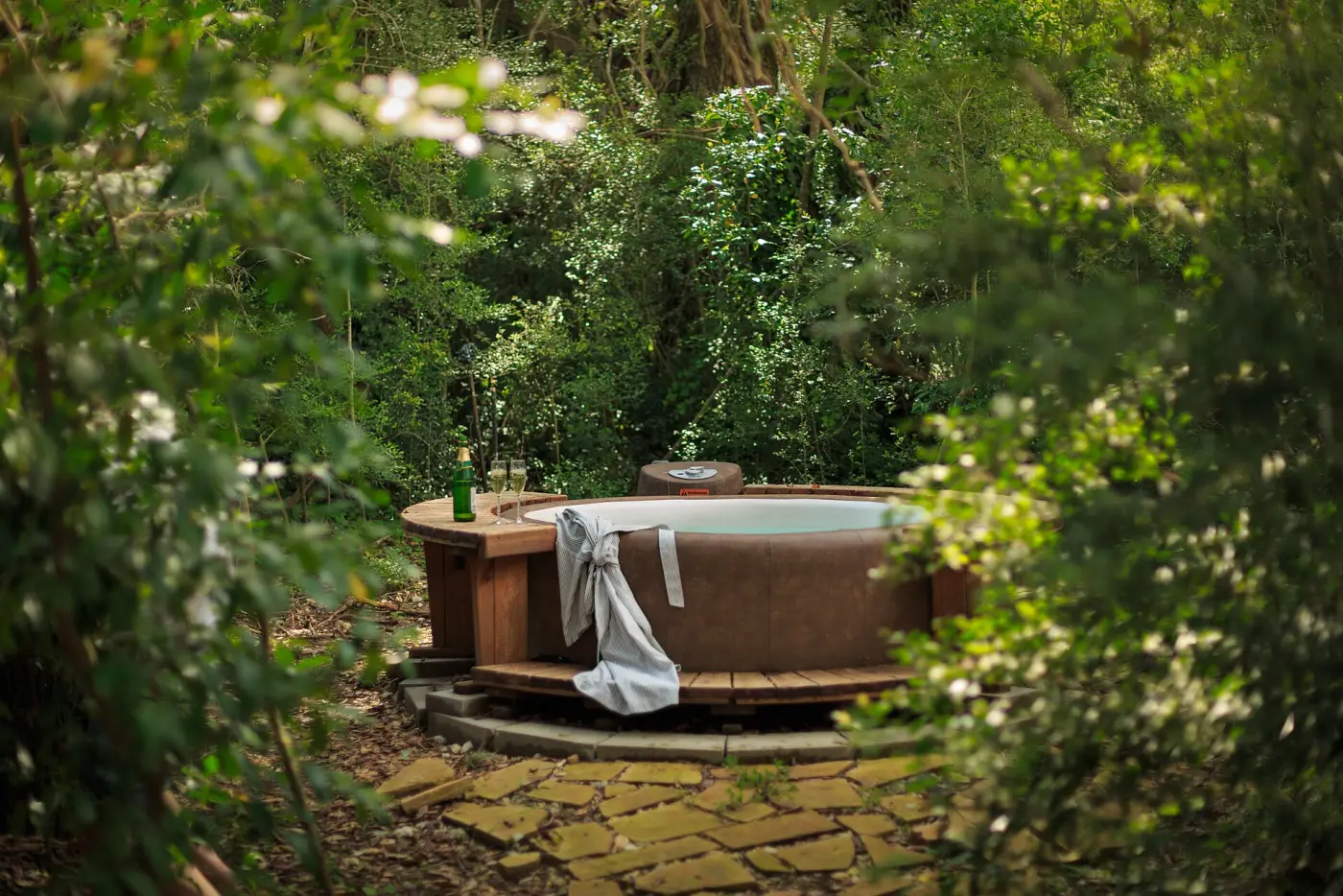

Small water, fast changes. A few hundred gallons shared by several bathers at 100 °F+ uses chlorine much faster than a pool. Test before every soak if you can.
Dichlor is the usual spa chlorine. It dissolves quickly and holds pH steady, but it adds stabilizer every time. Most owners drain and refill every three to four months, which also resets stabilizer.
Add after the soak. Dose chlorine at the end of the day with the jets running, lid open for a few minutes, then closed.
Halve your doses to start. In small volumes it is easy to overshoot. Add half, wait 15 minutes, test, then add the rest.
Key facts
- A 400-gallon spa needs about 1/25th of the dose of a 10,000-gallon pool for the same change.
- Dichlor adds about 0.9 ppm of stabilizer for every 1 ppm of chlorine, so stabilizer climbs fast in a spa.
- Hot water speeds up scaling: keep pH near 7.4 and calcium moderate.
How it's calculated
Every dose starts from the same formula: pool gallons × ppm change × 8.34 ÷ 1,000,000 gives the pounds of pure chemical. That is then adjusted for what the product really contains.
- Liquid chlorine: 1 gallon of 10% raises 10,000 gallons by 10 ppm.
- Dry chlorine: pure pounds ÷ strength (0.65 for 65% cal-hypo).
- Baking soda: × 1.68, because alkalinity is measured as calcium carbonate.
- Calcium chloride dihydrate: × 1.47.
- Stabilizer: × 1.
The list is in a sensible order: alkalinity and calcium first, stabilizer next, chlorine last.
Questions people ask
How much chlorine do I put in a hot tub?
For a 400-gallon tub, about 0.1 oz of 56% dichlor raises free chlorine by 1 ppm, so roughly 0.3 oz for 3 ppm. Most owners keep 3–5 ppm.
How often should I add chemicals to my hot tub?
Chlorine after every use or every day or two; check pH and alkalinity weekly; balance calcium when you refill.
How often should I drain my hot tub?
Every three to four months for most home spas, sooner with heavy use. Draining resets stabilizer and dissolved solids.
Pool care guides
 How to Raise pH in a Pool: Soda Ash, Aeration or BoraxLow pool pH stings eyes and eats equipment. Here's how to raise it with aeration, soda ash or borax, how much to start with, and why it keeps dropping.
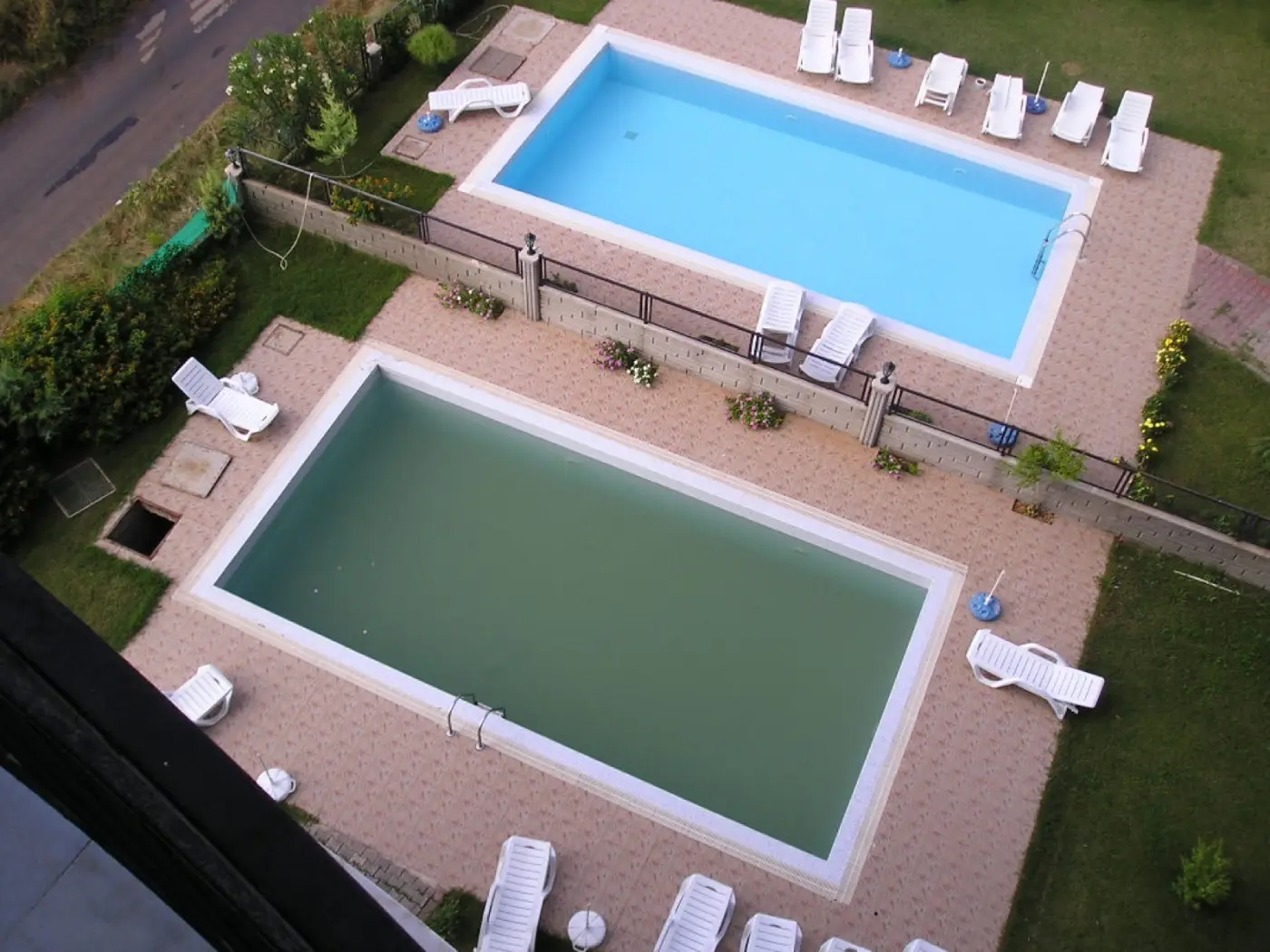 Pool Green but Chlorine Is High? 4 Real Causes and FixesA green pool with a high chlorine reading usually means metals, too much stabilizer, a misleading test or pollen. Here's how to tell which one you have and what to do.
 Pool Salt Cell Guide: How It Works, Cleaning and Low Salt ReadingsHow a pool salt cell makes chlorine, how to clean it, how long it lasts, and why it reads 'low salt' when the water isn't. A practical guide for salt pool owners.
Other pool calculators
- Pool volume calculatorHow many gallons your pool holds
- Pool salt calculatorHow many bags of salt to add
- Pool chemical calculatorChlorine, alkalinity, calcium, stabilizer
- Pool shock calculatorHow much shock to add
- Pool pump calculatorFlow rate, run time and cost
- Pool heater calculatorBTU size and heat-up cost
- Pool fill cost calculatorWater cost and time to fill
- Pool chlorine calculatorHow much chlorine to add
- Pool heat pump size calculatorWhat size heat pump you need
- Hot tub electricity cost calculatorWhat your spa costs to run