Why Is My Pool Green? Causes and a 4-Step Fix
A green pool almost always means algae: chlorine fell too low for your stabilizer level. Here's how to find the cause, clear it in days, and keep it from coming back.
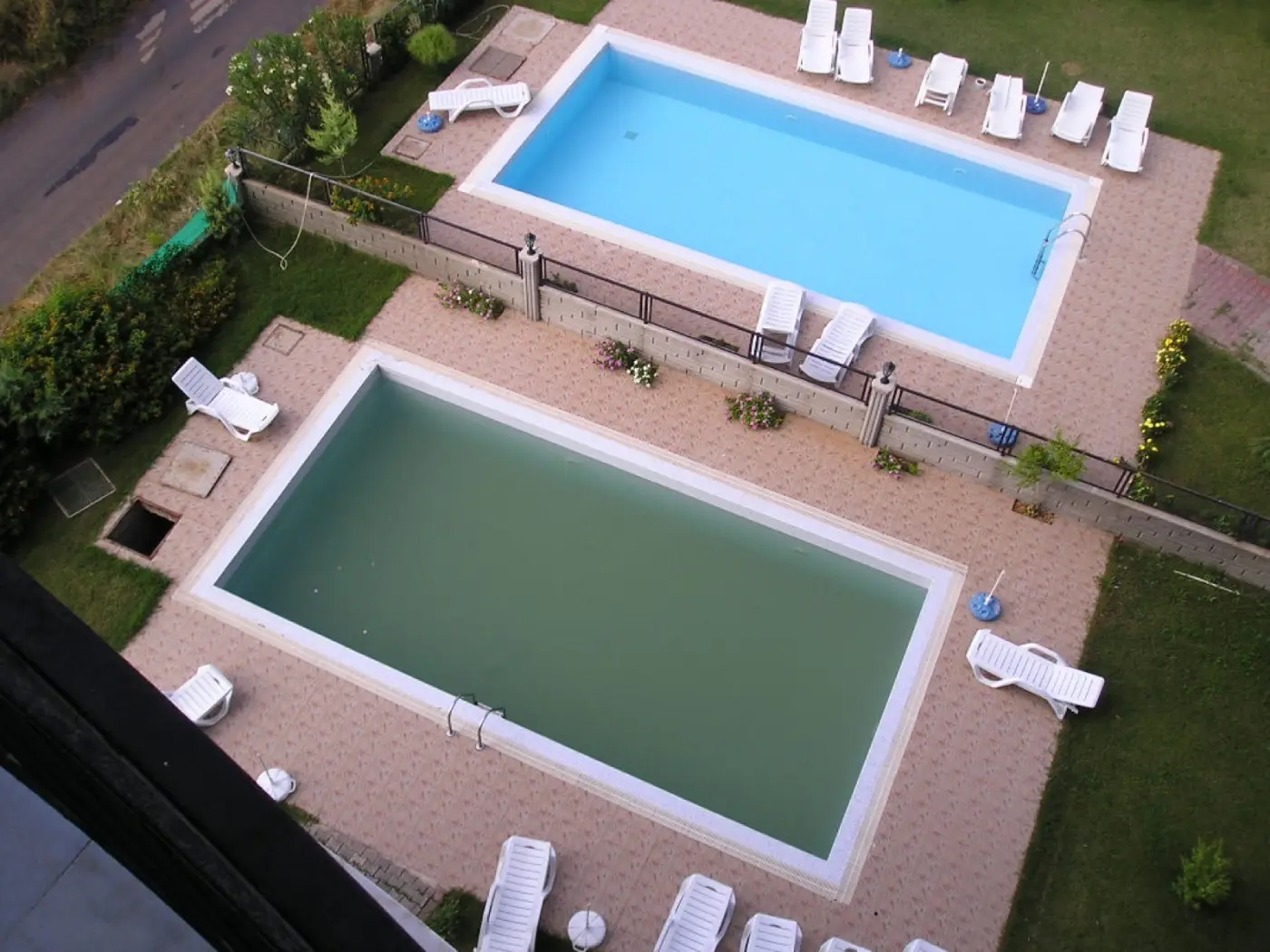
A pool turns green for one main reason: algae grew because the free chlorine dropped too low for your stabilizer (CYA) level. Hot weather, heavy rain, a missed weekend or a pump that ran short all speed it up. The good news is that the fix is the same every time.
What turns a pool green
Algae. Algae spores arrive with wind, rain and swimmers every day. Chlorine kills them as they land. When chlorine runs low, they multiply faster than it can keep up, and the water goes from hazy to light green to dark green within days.
Chlorine that was too low for the stabilizer. Stabilizer (cyanuric acid, or CYA) protects chlorine from sunlight but also slows it down. With 30 ppm of CYA, 2 ppm of chlorine is enough. With 80 ppm, the same 2 ppm lets algae grow. A common rule is to keep free chlorine at about 7.5% of your CYA level or more: 3 ppm with 40 ppm of CYA, 6 ppm with 80.
Metals. If the water is clear but tinted green, or it turns green right after you shock, the cause is often copper. It comes from copper algaecides, ionizers, a corroding heater or some well water.
Step 1: Test before you buy anything
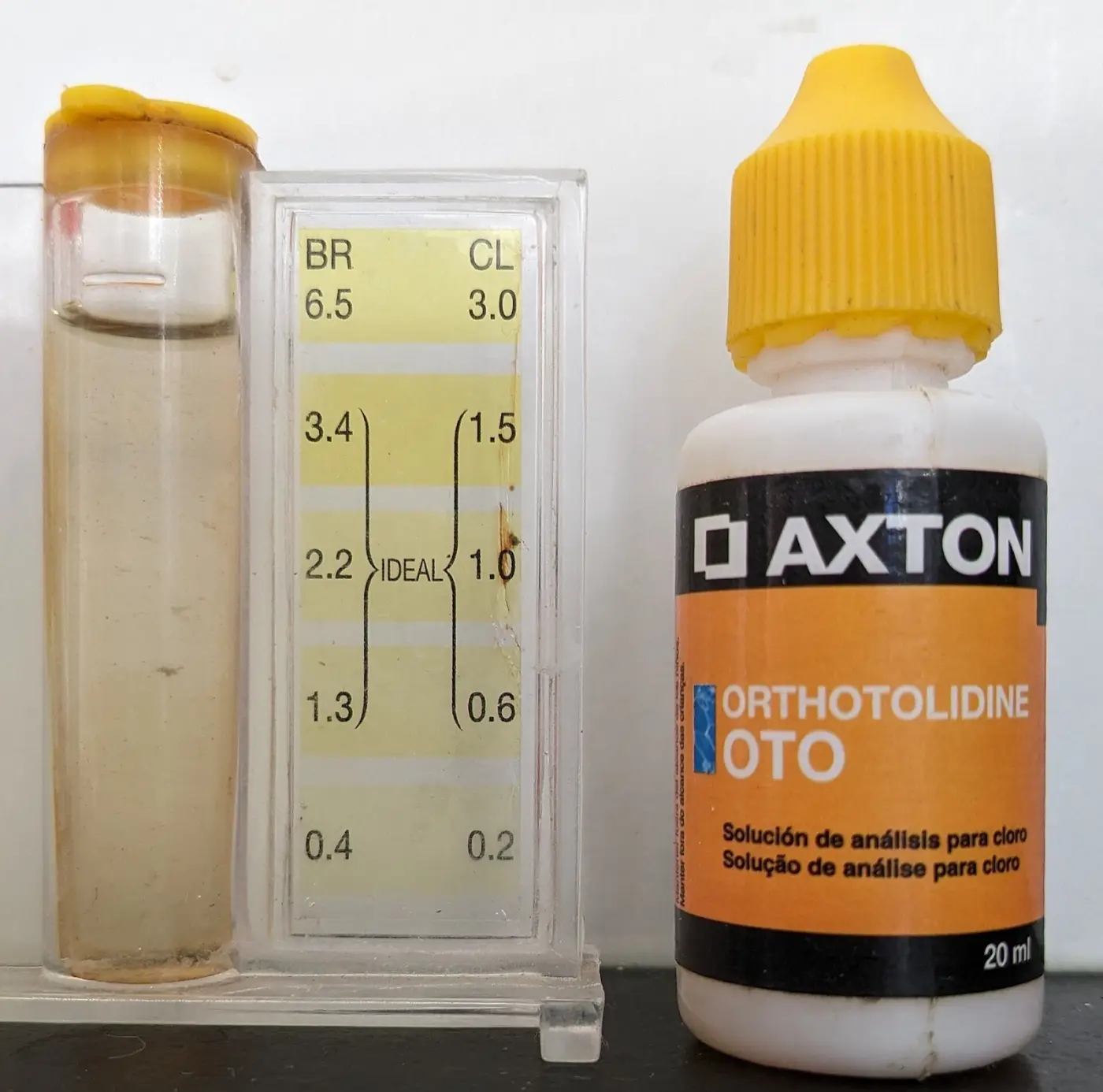
Test free chlorine, pH and stabilizer. A pool store can do it if you don’t have a kit. Two numbers decide everything else:
- Stabilizer (CYA) sets how much chlorine you need to shock.
- pH should be 7.2 to 7.8. Chlorine works noticeably better at the low end of that range.
Step 2: Raise chlorine to shock level and hold it there
Shock level is about 40% of your CYA, never below 10 ppm. With 50 ppm of stabilizer, that is 20 ppm of free chlorine. The pool shock calculator turns that into an exact amount of liquid chlorine or cal-hypo for your pool.
The step most people skip: hold it there. One dose is rarely enough for a green pool. Test morning and evening and top up to shock level each time until the water is clear.
Liquid chlorine is the best choice here, because it adds nothing else. Dichlor and cal-hypo work, but a week of shocking with them adds a lot of stabilizer or calcium.
Step 3: Brush, run the filter and clean it
- Brush walls and floor daily. Algae clings to surfaces where chlorine reaches it slowly.
- Run the pump 24 hours a day until the water is clear.
- Clean or backwash the filter often. Dead algae clogs it fast, and a clogged filter means slow circulation.
The water usually goes green, then gray-blue and cloudy, then clear. Cloudy is progress.
Step 4: Know when you’re done
You’re done when three things are true:
- The water is clear and you can see the main drain.
- Free chlorine drops by 1 ppm or less overnight, measured at dusk and again at dawn.
- A test shows no combined chlorine left (0.5 ppm or less).
Then let chlorine fall back to your normal level. Find that level in the pool chemical calculator.
If the green is metals, not algae
Metals don’t die with chlorine; shocking can make them worse. Signs: the water is green but clear, there is little or no slime, and stains appear on the plaster. Lower pH to about 7.2, add a metal sequestrant, and find the source. Stop using copper algaecide, and have a heater checked for corrosion.
How to keep it from coming back
- Keep free chlorine at or above 7.5% of your CYA, every day.
- Keep CYA at 30–50 ppm in a chlorine pool, 60–80 in a salt pool. Above that, chlorine needs climb fast and the only fix is replacing water.
- Run the pump long enough to filter all the water at least once a day. The pool pump calculator gives you the hours.
Run the numbers for your pool
Using your saved pool: . My pool
2.16 gal (276 fl oz)
of liquid chlorine 12.5% raises free chlorine from 2 to 20 ppm. Add it at dusk, pour it in front of a return jet, and keep the pump running.
- Shock level
- 20 ppm
- Increase
- 18 ppm
- Stabilizer
- 50 ppm
What to add
- 2.16 gal (276 fl oz)Liquid chlorine 12.5%
What would change your result
- Shock at dusk and hold chlorine at this level, retesting every few hours, until the water is clear.Read
Keep chlorine at shock level and retest every few hours until the water is clear. Stay out of the pool until free chlorine is back to your normal level.
Quick answers
Why is my pool green but the chlorine is high?
Either the green is metals, usually copper from an algaecide, ionizer or corroding heater, or the chlorine reading is wrong. Very high chlorine can bleach a DPD test so it reads low, and a green tint with clear water points to metals rather than algae.
How long does it take to clear a green pool?
Usually 3 to 7 days if you hold chlorine at shock level the whole time, brush daily and keep the filter running and clean. Large or very dark pools can take longer.
Can I swim in a green pool?
No. Algae can hide bacteria, cloud the water so you can't see the bottom, and make surfaces slippery. Wait until the water is clear and chlorine is back to your normal level.
Does baking soda clear a green pool?
No. Baking soda raises alkalinity. It doesn't kill algae. Only enough chlorine, held long enough, does that.
Pool costs in your state
What a pool pump and a hot tub cost to run at your state's electricity price.
Keep reading
 How to Raise pH in a Pool: Soda Ash, Aeration or BoraxLow pool pH stings eyes and eats equipment. Here's how to raise it with aeration, soda ash or borax, how much to start with, and why it keeps dropping.
- Pool Green but Chlorine Is High? 4 Real Causes and FixesA green pool with a high chlorine reading usually means metals, too much stabilizer, a misleading test or pollen. Here's how to tell which one you have and what to do.
 Pool Salt Cell Guide: How It Works, Cleaning and Low Salt ReadingsHow a pool salt cell makes chlorine, how to clean it, how long it lasts, and why it reads 'low salt' when the water isn't. A practical guide for salt pool owners.