How to Shock a Pool: When, How Much and Which Shock to Use
Shocking means raising chlorine high enough, long enough, to kill what normal levels can't. Here's when to do it, how to find your shock level from your stabilizer, and which product to use.
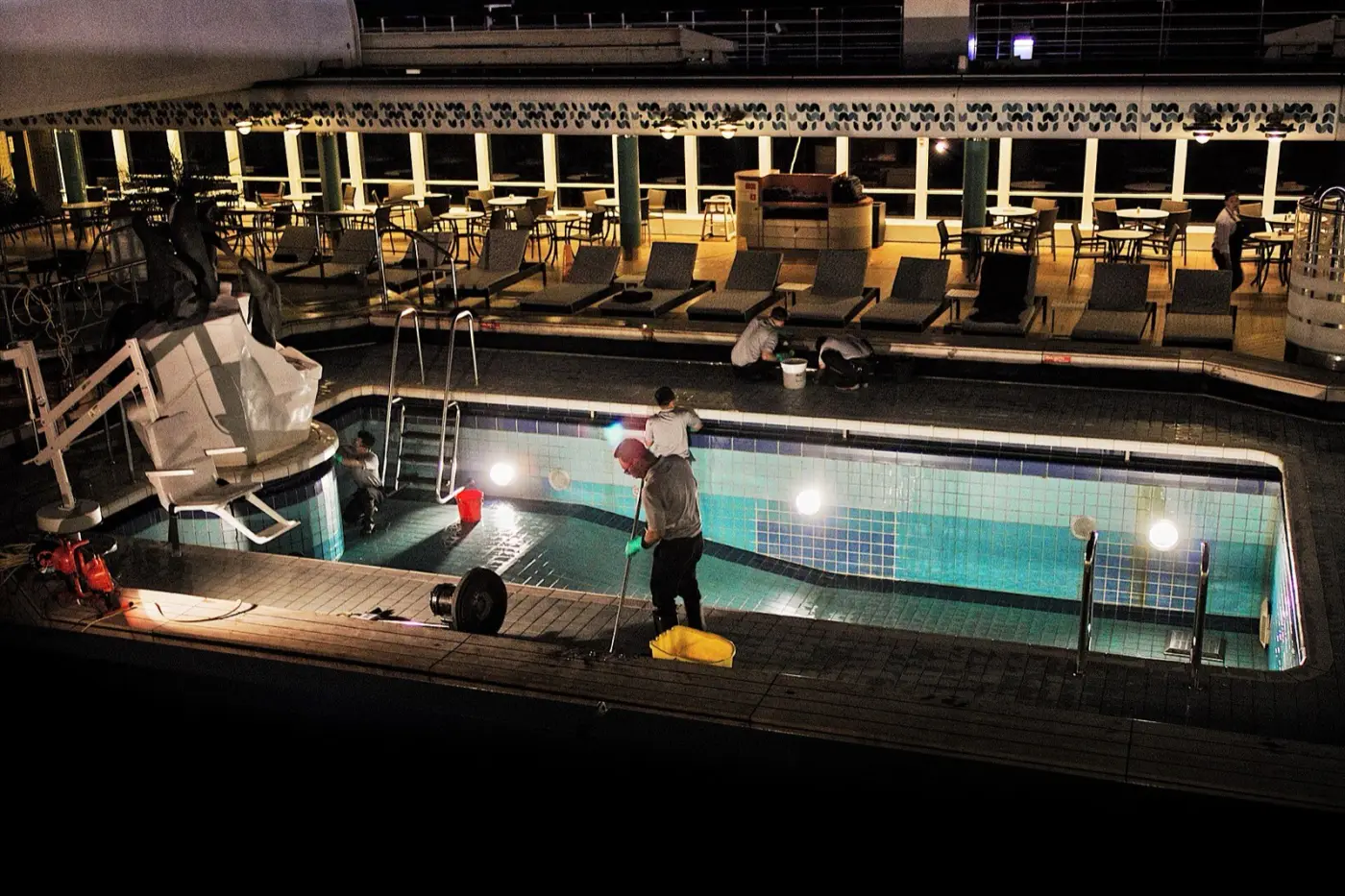
To shock a pool is to raise free chlorine far above normal and keep it there until the problem is gone: algae, cloudiness, a strong chlorine smell (which actually means too little free chlorine). It’s not a product but a level, and that level depends on your stabilizer.
When to shock
- Algae: a green tint, slimy walls, or a pool turning green.
- Cloudy water that a filter cleaning didn’t fix.
- After a big swim party, a storm, or an accident in the water.
- When combined chlorine (total minus free) is above 0.5 ppm.
- When opening the pool for the season.
How much: your shock level
Stabilizer (cyanuric acid, CYA) shields chlorine from the sun but also slows it down. The more CYA you have, the higher you must go. A common rule:
Shock level ≈ 40% of your CYA, and never below 10 ppm.
| Stabilizer (CYA) | Shock level |
|---|---|
| 0–25 ppm | 10 ppm |
| 30 ppm | 12 ppm |
| 50 ppm | 20 ppm |
| 70 ppm | 28 ppm |
| 90 ppm | 36 ppm |
The pool shock calculator turns this into the exact amount of product for your pool. For example, a 15,000-gallon pool at 2 ppm with 50 ppm of CYA needs about 2.2 gallons of 12.5% liquid chlorine.
Which shock to use
| Shock | Strength | What else it adds | Best for |
|---|---|---|---|
| Liquid chlorine | 10–12.5% | Nothing that stays | Most situations, especially repeated shocking |
| Cal-hypo | 65–73% | Calcium (about 0.7 ppm per ppm) | Occasional shock; pools that need calcium |
| Dichlor | 56% | Stabilizer (about 0.9 ppm per ppm) | Only if you also need CYA |
Avoid shocking with trichlor tablets: they dissolve over days and add a lot of stabilizer. The bag’s “1 lb treats 10,000 gallons” is also misleading. One pound of 65% cal-hypo raises 10,000 gallons by only about 7.8 ppm, short of most shock levels.
Step by step
- Test free chlorine, pH and CYA. Bring pH to 7.2–7.6 first.
- Shock at dusk. Pour liquid chlorine slowly in front of a return jet. Pre-dissolve granular shock in a bucket of pool water unless the label says otherwise.
- Brush the walls and floor and run the pump.
- Retest every few hours at first and top back up to shock level.
- Stop when the water is clear, combined chlorine is 0.5 ppm or less, and chlorine drops by 1 ppm or less overnight.
- Swim again when free chlorine is back in your normal range.
Safety
Never mix different chlorine products, or chlorine with acid. Add chemicals to water, not water to chemicals. Store them dry, apart and out of the sun.
Run the numbers for your pool
Using your saved pool: . My pool
2.16 gal (276 fl oz)
of liquid chlorine 12.5% raises free chlorine from 2 to 20 ppm. Add it at dusk, pour it in front of a return jet, and keep the pump running.
- Shock level
- 20 ppm
- Increase
- 18 ppm
- Stabilizer
- 50 ppm
What to add
- 2.16 gal (276 fl oz)Liquid chlorine 12.5%
What would change your result
- Shock at dusk and hold chlorine at this level, retesting every few hours, until the water is clear.Read
Keep chlorine at shock level and retest every few hours until the water is clear. Stay out of the pool until free chlorine is back to your normal level.
Quick answers
How often should I shock my pool?
Only when you need to: after algae appears, cloudy water, a heavy swim party, a big storm, or when combined chlorine is above 0.5 ppm. A pool kept at the right chlorine level every day rarely needs it.
How long after shocking can I swim?
When free chlorine has come back down to your normal range. Test first. Depending on how high you went, that can take several hours to a day or more.
Should I shock a pool in the day or at night?
At dusk or at night. Sunlight destroys chlorine quickly, so a dose added in the evening works through the night instead of burning off.
Can you shock a pool too much?
A higher level than needed wastes chlorine and keeps you out of the pool longer, and very high levels can bleach liners and swimwear. Aim for your shock level, not beyond it.
Pool costs in your state
What a pool pump and a hot tub cost to run at your state's electricity price.
Keep reading
 How to Raise pH in a Pool: Soda Ash, Aeration or BoraxLow pool pH stings eyes and eats equipment. Here's how to raise it with aeration, soda ash or borax, how much to start with, and why it keeps dropping.
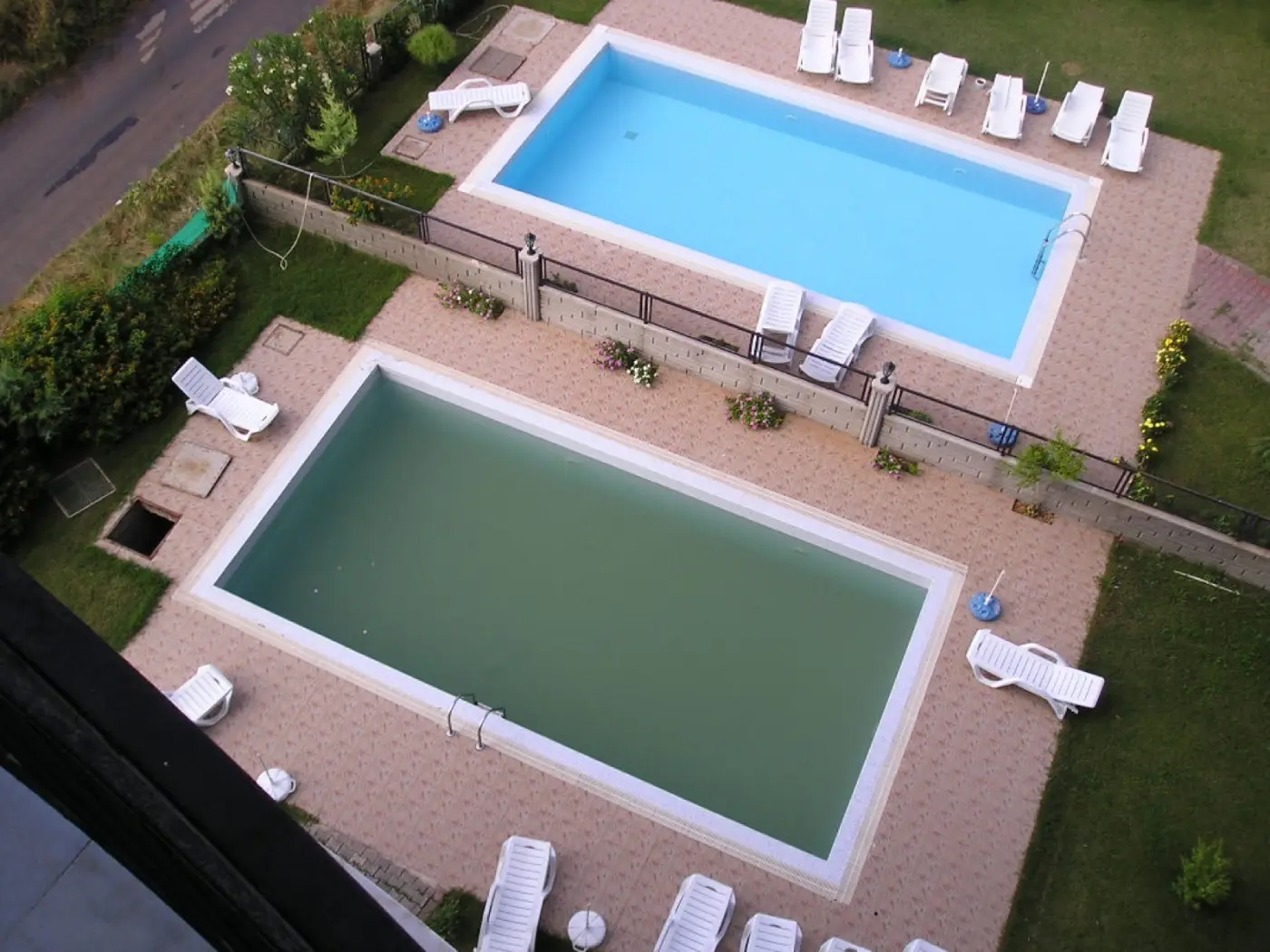 Pool Green but Chlorine Is High? 4 Real Causes and FixesA green pool with a high chlorine reading usually means metals, too much stabilizer, a misleading test or pollen. Here's how to tell which one you have and what to do.
 Pool Salt Cell Guide: How It Works, Cleaning and Low Salt ReadingsHow a pool salt cell makes chlorine, how to clean it, how long it lasts, and why it reads 'low salt' when the water isn't. A practical guide for salt pool owners.